
After the finance minister directed public sector banks to join the account aggregator (AA) ecosystem, 5-6 major ones, including State Bank of India (SBI) and Bank of Baroda are expected to go live by July-end. Sahmati, an industry alliance for the AA ecosystem, has been working with PSU banks to get them onboarded for quite some time now. So far, Union Bank of India and Punjab National Bank (PNB) have gone live on the AA ecosystem. While Union Bank has been live for a while, PNB went live earlier this month.

'We try to pick up stocks early and hold onto them for the long term.' 'We are not someone who buys and sells on a daily basis.'

Domestic new-age companies are making their presence felt at India Inc. According to a study done by Credit Suisse, only 15 per cent of the companies in the BSE500 index were formed after the year 2000. By comparison, nearly 90 per cent of unicorns - a start-up with a value of over $1 billion - were set up after 2000.

From the peak of $3.67 trillion in January, India's market cap has eroded by $676 billion amid rising bond yields and a record-breaking sell-off by overseas investors.

The Securities and Exchange Board of India's (Sebi's) board on Wednesday allowed foreign portfolio investors (FPIs) to trade in exchange-traded commodity derivatives. The move, it said, "will enhance liquidity and market depth, as well as promote efficient price discovery." Overseas investors will only be allowed to deal in non-agricultural commodity derivatives and only cash-settled contracts.

The depreciation in rupee may pose a problem for students who have taken loans from Indian lenders.

The Reserve Bank of India's (RBI's) recent decision to allow credit cards for payments through the Unified Payments Interface (UPI) is likely to attract a merchant discount rate (MDR), said a top payment industry source. For smaller merchants, a subsidy for MDR could be provided. "With credit card-UPI linkage, UPI will not only be a payment instrument but also a lending platform. "How can banks lend without a commercial model? Also, the government has said MDR will be zero for payment products but not for lending products," the source said, indicating the MDR regime for credit card-linked UPI payments.

Inflation trajectory, domestically as also globally, is what will shape the economy, and therefore the market, over the next couple of quarters.'

Industry players credit Sebi's first woman chairperson with putting special emphasis on cyber security, use of tech and data, areas where Sebi is trying to 'stay ahead of the curve'.

Spending on international travel tripled in April 2022 as Covid-related curbs were eased in various countries in FY22.

A day after the Reserve Bank of India's (RBI's) Monetary Policy Committee hiked the policy repo rate by 50 basis points (bps), several commercial banks, including ICICI Bank and Bank of Baroda, raised their external benchmark-linked loan rates by an equal amount on Thursday. HDFC, the country's largest mortgage lender, too, increased its interest rates on housing loans by another 50 bps. In total, it has raised rates by 85 bps since May 4, when the RBI had increased the repo rate by 40 bps in an off-cycle meeting.

The Securities and Exchange Board of India (Sebi) could soon issue interim orders imposing a market ban on the two former fund managers of Axis Mutual Fund (MF) for suspected front-running of trades, said people with knowledge of the development. "The market regulator has gathered prima facie evidence that demonstrates that the duo has violated the integrity of the market. "While a detailed investigation is still pending in the matter, Sebi could take action under Section 11 (4) to prevent further harm to the investors and the securities market," said a source.

There are loans to salaried people where the borrower is employed, but has failed to make repayment. Such loans would be identified and sold in a pool to ARCs.

Overseas investors, as well as other key stakeholders, such as brokers, custodians, and clearing corporations, are yet to iron out critical issues, even as the shift towards a shorter trade settlement cycle approaches new phases. Several industry players said foreign portfolio investors (FPIs) are still facing impediments over the trade confirmation timelines, foreign exchange (forex) bookings, and pre-funding requirements. This could potentially act as a roadblock when it comes to moving entirely to the new T+1 settlement cycle from next year.

Flow of money into non-resident Indian (NRI) deposits moderated sharply to $3.23 billion in April 2021-March 2022 from $7.36 billion in the same period of the previous year. Outstanding deposits have also gone down to $139.02 billion at the end of March 2022. This compares to $141.89 billion a year ago, according to Reserve Bank of India (RBI) data.
Spending through the credit card in March 2022 jumped 48 per cent year-on-year to top Rs 1 trillion -- five months after it had hit the same figure for the first time in October 2021, buoyed by festive season expenditure. The jump has been driven by the pickup in consumption as the pandemic recedes. Expenditure in March, at Rs 1.07 trillion, was up 24.5 per cent over February, the data put out by the Reserve Bank of India (RBI) showed.

Technology giant Apple has informed its customers in India that it will no longer store their card information on file and will not be accepting payments made by debit cards and credit cards for purchases or subscriptions on the App store or other Apple services. The decision has been taken by the US-based company in view of the Reserve Bank of India's (RBI's) card data storage guidelines, which will kick in from July 1. The deadline for implementing these norms was extended twice.
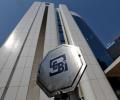
Markets regulator Securities and Exchange Board of India (Sebi) is examining allegations of front-running and other irregularities against a host of domestic fund managers across the asset management industry, said people in the know. Developments at Axis Mutual Fund have prompted the regulator to speed up probe to ensure that there is no drop in confidence in the Rs 39-trillion mutual fund (MF) industry. "We have received complaints against a few fund managers and are looking into possible violations, including those related to code of conduct," said a regulatory source, refusing to divulge names of fund houses as things are at a preliminary stage.

The Securities and Exchange Board of India (Sebi) has mulled introduction of confidential initial public offering (IPO) filings and "pre-filing" of offer documents, a move aimed at giving issuers flexibility and alleviating concerns around privacy. Industry players said the concept, if implemented, would give a fillip to the domestic capital markets, ease the process and encourage more companies to go public. To be sure, the proposals are still at a discussion stage with Sebi just floating a consultation paper seeking public feedback.

'For the next two years, we expect the bulk of earnings growth contribution from sectors like financials and energy, where the outlook remains positive, while the sectors which are linked to domestic consumption and are currently witnessing strains on margins have low salience for Nifty earnings.'
 © 2026 Rediff.com - Advertise with us - Disclaimer - Privacy Policy - Sitemap - Feedback - About us - Terms of use - Grievances